Why does handloom remain a key part of India’s economy?, Pg8
India's handloom sector, a vital economic and cultural asset, provides livelihoods to 35 lakh weavers, requiring strategic policy support for future growth and global recognition.
Practice MCQs
855 Students attempted
Key Highlights:
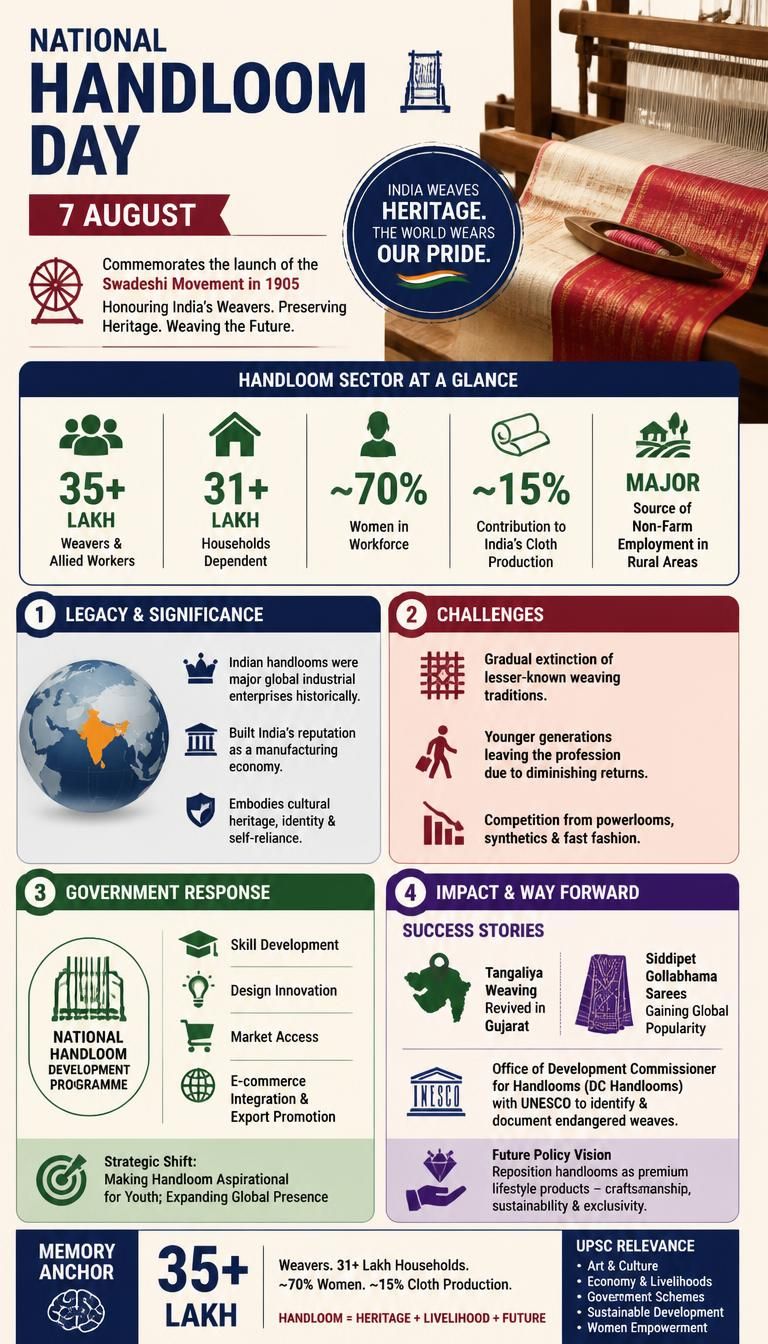
- National Handloom Day, observed on August 7, commemorates the launch of the Swadeshi Movement in 1905 and honors Indian weavers.
- The handloom sector provides livelihoods to over 35 lakh weavers and allied workers across more than 31 lakh households, with women comprising nearly 70% of the workforce.
- It contributes approximately 15% of India's cloth production and is a significant source of non-farm employment in rural areas.
- Government initiatives like the National Handloom Development Programme focus on skill development, design innovation, and market access.
- There is a strategic shift towards making handloom aspirational for younger generations and expanding its presence in global markets.
Handloom.jpg
Detailed Insights:
- Historically, Indian handlooms were major global industrial enterprises, establishing India's reputation as a manufacturing economy.
- The sector faces challenges such as the gradual extinction of lesser-known weaving traditions and younger generations leaving the profession due to diminishing returns.
- The National Handloom Development Programme aims to integrate handlooms with e-commerce platforms and boost export opportunities.
- Successful interventions include the revival of Tangaliya weaving in Gujarat and the growing popularity of Siddipet Gollabhama sarees.
- The Office of the Development Commissioner for Handlooms, in collaboration with UNESCO, is working to identify and document endangered weaves.
- Future policy aims to reposition handlooms as premium lifestyle products, emphasizing craftsmanship, sustainability, and exclusivity.
- India seeks to leverage its traditional weaves to build its soft power and expand exports, requiring consistent quality and stronger branding.
- There is a need for better measurement of the handloom sector's contribution to GDP, exports, and employment for effective policymaking.
- Handloom is considered a strategic asset for India's future, contributing to rural employment, women's empowerment, and cultural preservation, aligning with the vision of Viksit Bharat.
Key Concepts Involved:
- Swadeshi Movement: An economic strategy and political movement in British India that involved boycotting British products and promoting domestic goods.
- Geographical Indication (GI) Tag: A sign used on products that have a specific geographical origin and possess qualities or a reputation due to that origin.
- Viksit Bharat: The vision of the Government of India to transform India into a developed nation by the year 2047.
- Soft Power: The ability to attract and co-opt rather than coerce, using cultural and economic influence to achieve foreign policy objectives.

SuperKalam is your personal mentor for UPSC preparation, guiding you at every step of the exam journey.
Download the App


STUDY RESOURCES
CONTACT US
ⓒ Snapstack Technologies Private Limited