Amount sought by UN food agencies to shield people from El Nino, Pg12
FAO, WFP appeal for $202 million to shield 8.8 million across 22 nations from El Niño-induced drought, flood, and storm threats.
Practice MCQs
898 Students attempted
Key Highlights:
- The UN Food and Agriculture Organization (FAO) and World Food Programme (WFP) appealed for $202 million to address the impacts of El Niño.
- The funds are sought to protect 8.8 million people across 22 high-risk countries.
- El Niño is anticipated to increase risks of drought, floods, and storms in several regions.
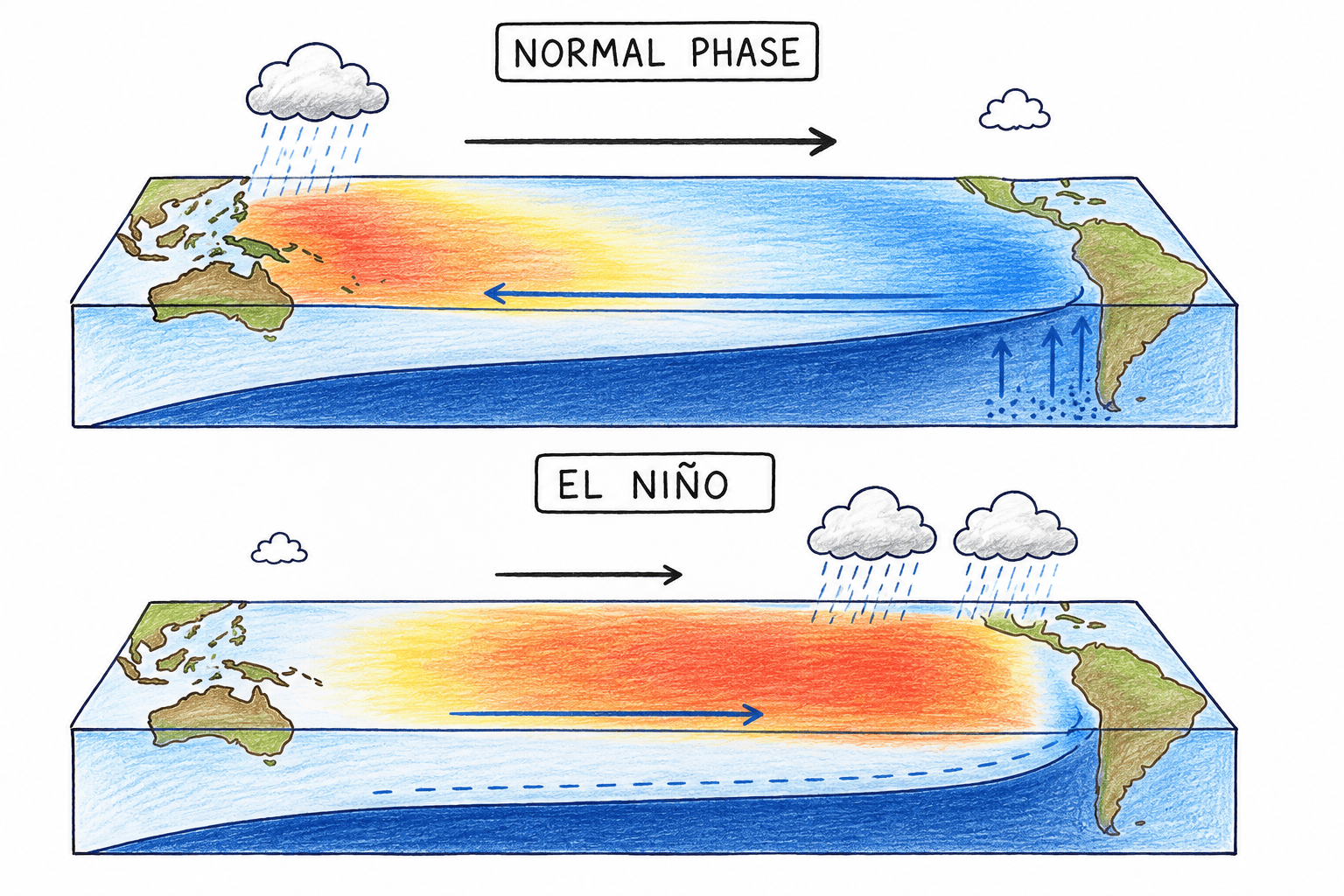
el nino.png
Detailed Insights:
- El Niño is a natural climate pattern characterized by the warming of ocean surface temperatures in the central and eastern tropical Pacific Ocean, which disrupts normal global weather patterns.
- This phenomenon recurs irregularly, typically every two to seven years, and can lead to extreme weather events such as severe droughts, widespread floods, and intense storms in various parts of the world.
- Current forecasts indicate that El Niño conditions are already underway and are expected to strengthen, potentially persisting as a strong to very strong event through the Northern Hemisphere winter of 2026-27.
- The Food and Agriculture Organization (FAO) is a specialized agency of the United Nations dedicated to leading international efforts to defeat hunger, improve nutrition, and promote sustainable agricultural practices globally.
- The World Food Programme (WFP), the largest humanitarian organization within the UN, focuses on providing emergency food assistance and building resilience against climate change and other shocks.
- The joint appeal aims to facilitate early action and preparedness measures to mitigate the severe humanitarian consequences of El Niño on vulnerable populations, particularly those dependent on agriculture.
Key Concepts Involved:
- El Niño: A climate pattern marked by above-average sea surface temperatures in the central and eastern tropical Pacific Ocean, influencing global weather.
- Food and Agriculture Organization (FAO): A UN specialized agency working to achieve global food security, improve nutrition, and promote sustainable agricultural development.
- World Food Programme (WFP): The United Nations' primary humanitarian agency providing food assistance in emergencies and supporting long-term food security and resilience.

SuperKalam is your personal mentor for UPSC preparation, guiding you at every step of the exam journey.
Download the App


STUDY RESOURCES
CONTACT US
ⓒ Snapstack Technologies Private Limited