The outbreak is outpacing us: Inside Congo's fight against rare Ebola strain, Pg1
Rare Bundibugyo Ebola strain ravages Congo, claiming 245 lives amidst limited diagnostics and no vaccine, outpacing global response efforts.
Practice MCQs
731 Students attempted
Key Highlights:
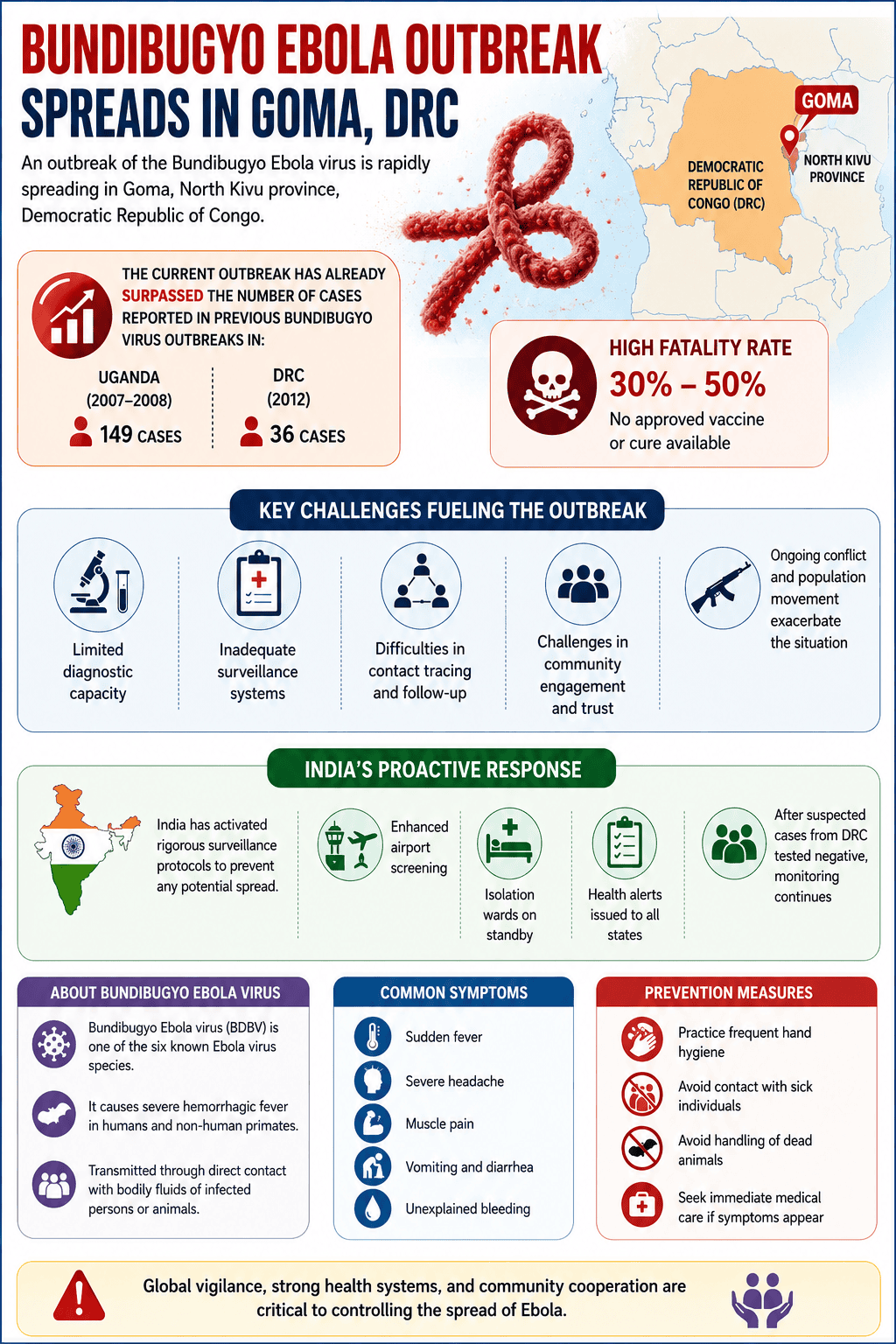
- An outbreak of the Bundibugyo Ebola virus is rapidly spreading in Goma, North Kivu province, Democratic Republic of Congo.
- The current outbreak has already surpassed the number of cases reported in previous Bundibugyo virus outbreaks in Uganda (2007-2008) and DRC (2012).
- The strain has a high fatality rate of 30% to 50% and currently lacks an approved vaccine or cure.
- Challenges include limited diagnostic capacity, inadequate surveillance, difficulties in contact tracing, and issues with community engagement, exacerbated by conflict and population movement.
- India has activated rigorous surveillance protocols, including airport screening and isolation wards, after suspected cases from DRC tested negative.
Ebola.png
Detailed Insights:
- Goma, a city with over 1 million people and a bustling cross-border economy with Rwanda, serves as a significant transit hub, contributing to the rapid spread of the virus.
- Médecins Sans Frontières (MSF) emergency medical coordinator Dr. Kerry Dierberg highlighted that the response efforts are being outpaced by the epidemic's rapid evolution.
- The absence of rapid diagnostic tests specifically for the Bundibugyo Ebola virus and limited access to specialized laboratories for PCR testing delay case confirmation and isolation.
- Despite DRC's prior experience with Ebola surveillance and response, the current system is struggling to contain this particular outbreak.
- The affected areas are characterized by ongoing conflict, poor health infrastructure, and attacks on healthcare workers, further complicating response efforts.
- MSF has also pointed out the limited number of expert medical organizations on the ground and insufficient support to address the scale of the crisis.
Scientific/Technical Concepts Involved:
- Ebola Virus Disease (EVD): A severe, often fatal illness in humans and other primates caused by ebolaviruses.
- Bundibugyo Ebola virus: One of the six known species of Ebola virus, responsible for the current outbreak in DRC.
- PCR Testing: A molecular test that detects genetic material from a specific organism, used here for definitive diagnosis of the virus.
- Epidemiology: The study of the distribution and determinants of health-related states or events in specified populations, and the application of this study to the control of health problems.
- Contact Tracing: The process of identifying people who may have come into contact with an infected person and monitoring them for symptoms.

SuperKalam is your personal mentor for UPSC preparation, guiding you at every step of the exam journey.
Download the App


STUDY RESOURCES
CONTACT US
ⓒ Snapstack Technologies Private Limited