Rare earth mining pollutes Mekong tributaries, threatens 'the world's kitchen', Pg18
Unregulated rare earth mining in Myanmar and Laos threatens Mekong River, impacting food exports and livelihoods across Southeast Asia.
Practice MCQs
782 Students attempted
Key Highlights:
- Rare earth mining in Myanmar and Laos is causing toxic runoff into the Mekong River tributaries, threatening the livelihoods of 70 million people in Southeast Asia.
- The toxic runoff contains heavy metals like arsenic, mercury, lead, and cadmium, posing risks of cancer and developmental harm.
- Thailand's food exports, including rice, are threatened by the contamination of crops irrigated with water from the Mekong tributaries.
Detailed Insights:
- The Mekong River faces increasing pressures from plastic pollution, upstream dams, and sand mining, with rare earth mining posing an existential threat.
- Agriculture is the backbone of Southeast Asia's economies, and rare earth mines are destroying "the world's kitchen" by contaminating crops.
- Thai scientists have found elevated heavy metal pollution in Mekong tributaries like the Sai and Ruak rivers, impacting communities that rely on the river for protein.
- The Thai government faces challenges in addressing the issue due to limited leverage against mining operations in Myanmar and Laos.
- Public universities, local governments, and regional organizations like the Mekong River Commission are monitoring heavy metal levels and educating communities.
Key Concepts Involved:
- Rare Earth Minerals: A set of seventeen metallic elements that are critical components in many electronic devices.
- Mekong River Commission: An intergovernmental organization that promotes cooperation in the sustainable management of the Mekong River Basin.
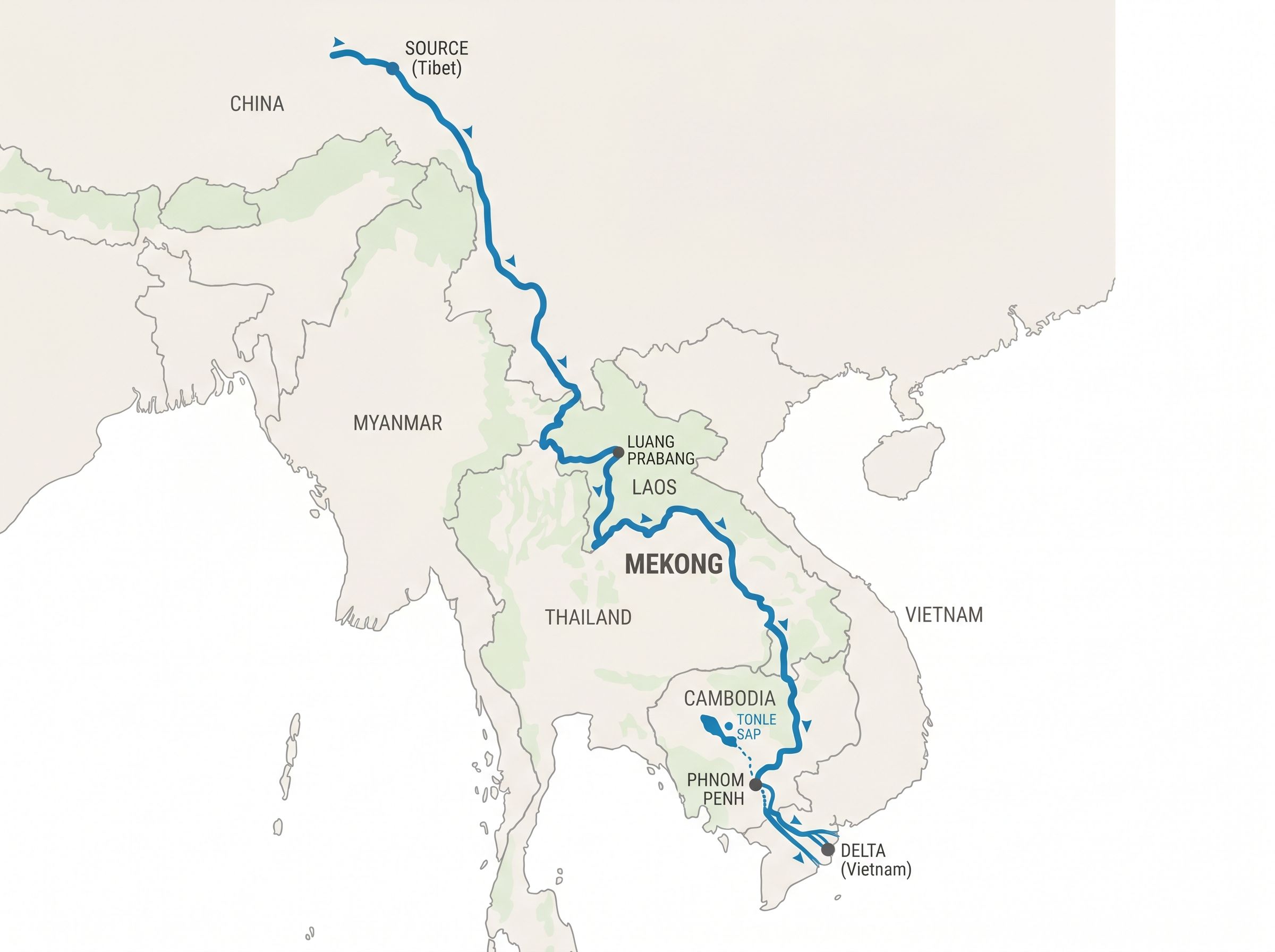
Mekong River

SuperKalam is your personal mentor for UPSC preparation, guiding you at every step of the exam journey.
Download the App


STUDY RESOURCES
CONTACT US
ⓒ Snapstack Technologies Private Limited